
The Science Behind Fun: How Enrichment Activities Support Skill Development for Autistic Tweens and Teens
by Melina DosSantos-Falquez, MA, BCBA

For autistic tweens and teens, learning does not stop when the school day ends, and it does not only happen in classrooms or therapy rooms. Many of the most meaningful opportunities for growth occur during everyday enrichment activities: games, creative projects, movement, group challenges, and shared interests often found in after-school and community settings.
While these activities may look like “just fun,” research and clinical experience show that interest-based, supportive experiences play a powerful role in social, emotional, and cognitive development for autistic youth across late childhood and adolescence.
Fun as a Developmentally Appropriate Pathway to Learning
As children move into their tween and teen years, learning becomes more complex. Social expectations increase, emotional awareness deepens, and independence becomes more important. Enrichment activities offer a developmentally appropriate way to practice these skills without pressure.
Through meaningful activities, tweens and teens benefit from:
- Low-stress opportunities to practice social and emotional skills.
- Natural peer interactions based on shared interests.
- Increased motivation and engagement.
- Opportunities to apply skills across environments.
- A growing sense of independence and confidence.
When learning feels enjoyable and relevant, participation increases and growth follows.
Executive Function Skills Embedded in Everyday Activities
Executive functioning skills such as planning, organization, impulse control, and flexibility are critical for success in both school and daily life. These skills are still developing throughout the tween and teen years and can be especially challenging for autistic youth.
Many common enrichment activities naturally support these skills, including:
- Board and strategy games.
- Building and robotics projects.
- Coding and technology activities.
- Creative challenges and group tasks.
- Team-based games and problem-solving activities.
These experiences require tweens and teens to follow multi-step directions, manage frustration, wait their turn, adjust strategies, and persist through challenges, all while staying engaged.
Social Communication Through Shared Interests
Social communication skills continue to evolve significantly during the tween and teen years. Shared activities provide natural, low-pressure opportunities for interaction that feel purposeful rather than forced.
Through group activities, tweens and teens practice:
- Initiating and responding to conversation.
- Negotiating roles, rules, and expectations.
- Perspective-taking.
- Asking for help or clarification.
- Resolving minor disagreements.
When adults support these moments subtly by modeling language, prompting when needed, and reinforcing positive interactions, youth gain confidence and begin using these skills independently.
Supporting Emotional Regulation and Self-Advocacy
Tweens and teens often experience emotional fatigue after long school days filled with academic demands and social expectations. Enrichment activities that prioritize flexibility and choice allow youth to decompress while still engaging meaningfully.
Supportive activity environments often include:
- Predictable routines with flexible participation.
- Calm or quiet spaces for regulation.
- Sensory tools and movement opportunities.
- Encouragement of self-advocacy, such as asking for breaks or choosing activities.
These experiences help youth recognize their needs, communicate them effectively, and build emotional regulation skills that carry over into other settings.
Creativity, Identity, and Growing Independence
The tween and teen years are a time of identity development. Creative and interest-based activities allow autistic youth to explore their strengths, preferences, and individuality in a supportive social environment.
Creative enrichment experiences support:
- Self-expression and confidence.
- Emotional resilience.
- Communication and collaboration.
- Problem-solving and fine-motor skills.
- A sense of accomplishment and belonging.
For many youth, these moments help shape how they see themselves and how they connect with others.
Generalization: Using Skills in Real Life
One of the most important goals for autistic tweens and teens is generalization: the ability to use skills across different people, environments, and situations. Enrichment activities naturally support this because they are dynamic, social, and less structured than formal learning settings.
Through everyday activities, young people begin to:
- Use communication skills spontaneously.
- Apply coping strategies in real-time situations.
- Navigate social challenges with greater independence.
- Transfer skills learned in school or therapy into daily life.
These small, meaningful moments are strong indicators of real progress.
A Neurodiversity-Affirming Approach to Enrichment
Effective enrichment environments for tweens and teens respect individuality and prioritize well-being. A neurodiversity-affirming approach focuses on:
- Supporting autonomy and choice.
- Honoring sensory needs.
- Valuing different communication styles.
- Encouraging strengths and interests.
- Reducing pressure for compliance.
When young people feel accepted and understood, they are more willing to engage, take risks, and grow.
Fun Is a Powerful Teacher
Everyday enrichment activities such as games, creative projects, movement, and shared interests, offer far more than entertainment. For autistic tweens and teens, they provide meaningful opportunities to practice essential life skills in ways that feel authentic and enjoyable.
Fun becomes the context.
Connection becomes the pathway.
Growth becomes the outcome.
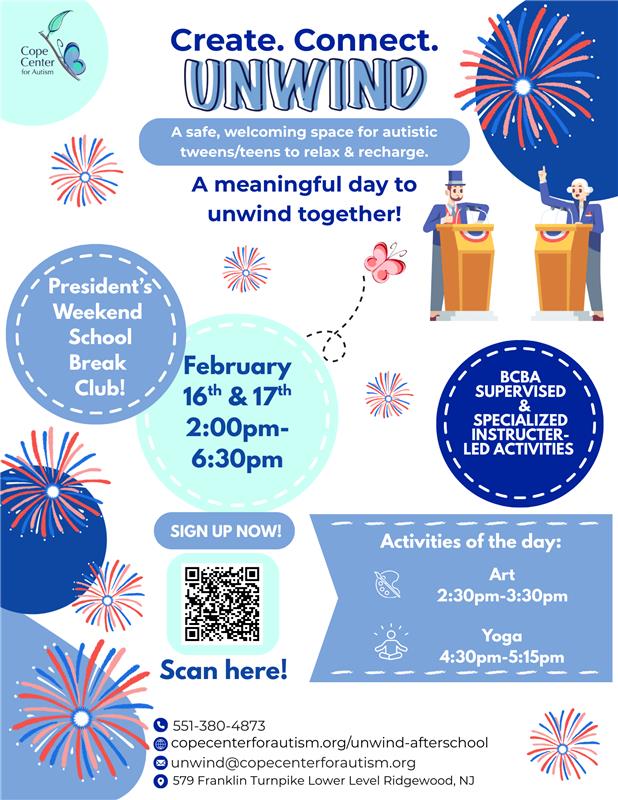
At the Cope Center for Autism, we know that children learn best when they feel comfortable, understood, and accepted. Enrichment activities that are thoughtfully planned can support growth in ways that feel natural rather than overwhelming. Unwind was designed to be that kind of space, a place where tweens and teens can unwind after school, enjoy activities they love, and build important skills while feeling like they truly belong.